

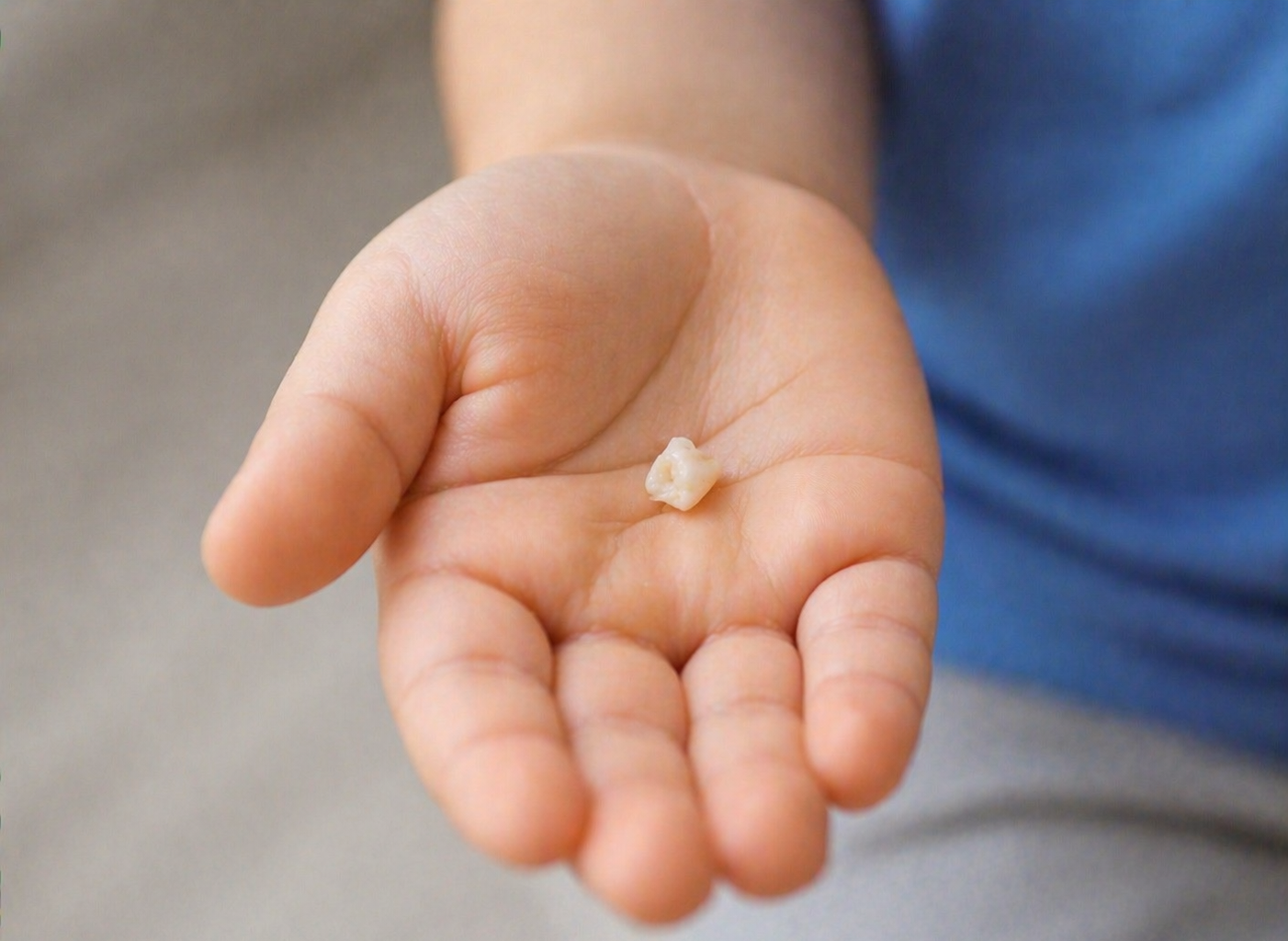
The loss of a baby tooth is one of the most symbolic moments of childhood. It is a natural, almost ritual-like step that marks a child’s growth. It is often accompanied by excitement, curiosity and – why not – even a touch of magic.
But behind this seemingly simple event lies a precise biological process that deserves attention. The question many parents ask themselves is: what should you really do when a baby tooth falls out?
A natural event… but not one to ignore
Baby teeth generally begin to fall out around the age of 5–6, making room for permanent teeth. This process occurs because the root of the baby tooth is gradually reabsorbed, allowing the tooth to loosen until it falls out.
However, not all situations are the same.
There is an important difference between:
- Physiological tooth loss (natural)
- Traumatic tooth loss (following an impact or accident)
And it is precisely this distinction that guides the correct course of action.
When the tooth falls out naturally
If the tooth was already loose and falls out without significant pain:
- It is enough to reassure the child
- Gently clean the area with water
- Check that there are no residues or abnormal bleeding
Light bleeding is normal and resolves on its own.
In this case, no urgent intervention is necessary. It is simply a stage of growth.
When you should pay attention instead
There are situations in which it is important not to underestimate the event:
Loss following trauma
If the tooth falls out after a fall or a blow:
- It is important to check that there is no damage to other teeth or to the gums
- A dental evaluation may be useful
Persistent pain or swelling
It is not normal for the loss of a baby tooth to be accompanied by intense pain or swelling.
Tooth lost too early
If a tooth falls out much earlier than expected, it can affect the growth of the permanent teeth.
Tooth that does not fall out but is very loose
In some cases, a minor intervention may be necessary to avoid discomfort or infections.
What NOT to do
- Never force the tooth to fall out by pulling it firmly
- Do not use improvised tools
- Do not ignore signs of pain or infection
- Do not think that “after all, it is just a baby tooth”
Even though they are temporary, baby teeth play a fundamental role in oral development.
The role of baby teeth: much more important than people think
Baby teeth are not only for smiling. They are essential for:
- Proper chewing
- Language development
- Maintaining space for permanent teeth
Early or problematic tooth loss can create future imbalances.
The support of the dentist
Even in the case of natural tooth loss, a regular check-up with the dentist is always recommended.
An emergency dental service may be useful when:
- The tooth loss is due to trauma
- The child is in pain
- There is swelling or persistent bleeding
The goal is to ensure healthy growth without complications.
A moment to experience with calm and confidence
The loss of the first little tooth is also an important emotional moment. It is an opportunity to:
- Reassure the child
- Convey calm and confidence
- Teach oral care
Turning this event into a positive experience helps build a healthy relationship with oral health.
Conclusion
The loss of a baby tooth is a natural step, but not a trivial one.
Observing, supporting and, when necessary, intervening: these are the three fundamental rules.
Because even the small details, in childhood, can make a big difference in the future.
And behind every smile with one little tooth missing, there is one more step toward growing up.